


Adaptable Housing is a research project developed over more than a decade, beginning with an architectural proposition and subsequently expanding into an investigation of the socioeconomic and institutional forces that shape access to housing.
The work is now being developed through three interconnected parts:
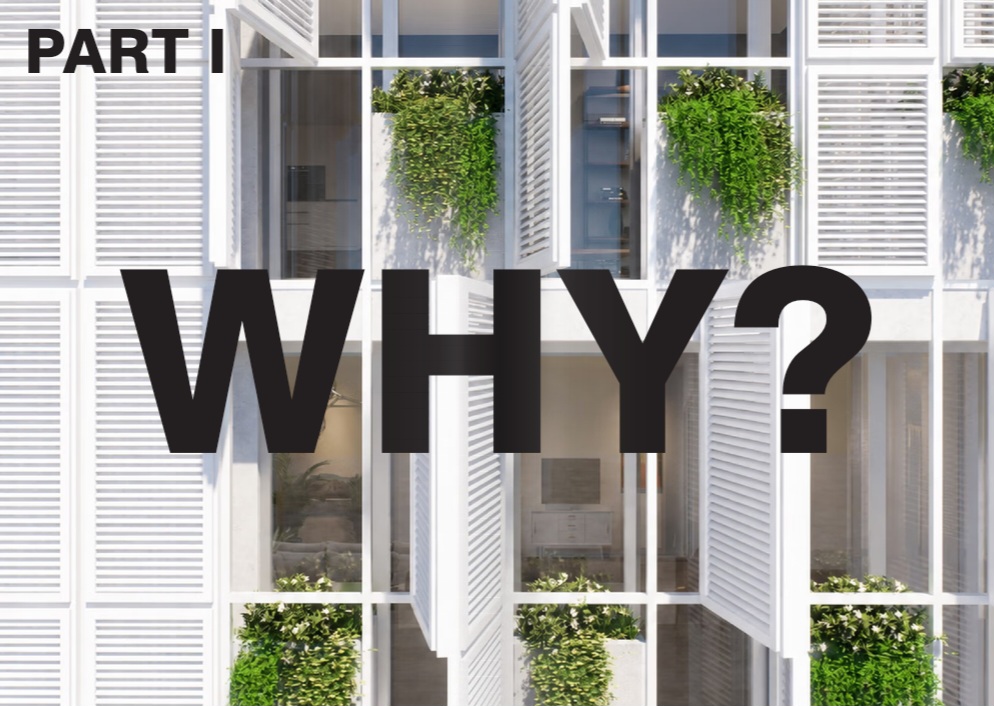
PART I — WHY?
The socioeconomic diagnosis.
Why does housing need to change in the first place? Part I examines housing through affordability, capital, vacancy, migration, urban proximity and public policy, asking how housing can continue to be produced while becoming increasingly disconnected from the incomes and everyday lives of those who inhabit the city.
PART II — WHAT?
The architectural proposition.
Adaptable Housing Prototype I (AHP1) explores the dwelling not as a finished object, but as an evolving framework—capable of responding to changing households, spatial needs and economic capacity over time.
PART III — HOW?
The mechanisms of implementation.
The inquiry moves upstream into finance, ownership, regulation and development, asking what institutional and economic mechanisms could allow adaptability to extend beyond architecture itself.
Together, the three parts follow a simple sequence:
Why is another housing model necessary?
What could architecture offer in response?
How could such a proposition actually become possible?
Part I — Why? is the first section to undergo comprehensive academic reworking and reference vetting, building upon the original research developed through the 2021 Executive MBA capstone at the American University of Beirut.
It is presented here as a research-in-progress specimen of the broader publication.
→ “Read Adaptable Housing — Part I: Why?”